
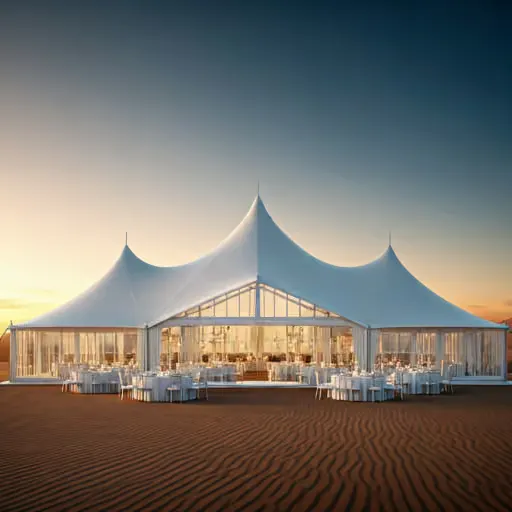
Fabric quality matters in car parking shades and tents because the covering controls how sunlight, air and rain reach the space below. It also has to work with the frame, seams and fixing system. A fabric that suits an open parking area may be unsuitable for a tent used to keep goods dry.
For UAE projects, the useful question is not simply “Which fabric is thickest?” It is “Which fabric has documented performance for this use?” This guide explains why the material matters and what to check before approving a quotation.
1. Sun protection depends on tested fabric performance
A shaded parking bay reduces direct sun exposure on vehicles. However, fabrics differ in their UV protection, visible shade and solar performance. These measurements are not interchangeable, so a shade percentage alone should not be treated as proof of UV protection.
Ask for the technical data for the exact product and colour being offered. Avoid relying on a general claim such as “maximum UV protection” without the supporting test information. Coverage also depends on the canopy position and the changing angle of the sun.
2. Airflow and rain protection require different choices
Standard uncoated knitted HDPE (high-density polyethylene) shade cloth has openings that allow air and water to pass through. It is a practical option for open parking and outdoor seating where ventilation is a priority, but it should not be specified as a waterproof roof.
Solid PVC-coated polyester is commonly used for tent roofs and weather-covering membranes. A suitable waterproof fabric still needs sound seams, adequate slope and planned drainage. Roof fabric alone does not make an entire tent watertight: entrances, wall joints and ground conditions also matter.
Some HDPE products have a waterproof coating. Check the specific product description rather than assuming that every HDPE fabric has the same properties.
3. Fabric weight is only one part of quality
GSM means grams per square metre. It describes fabric mass, not a complete quality rating. Two materials with a similar GSM can have different yarn construction, coatings, tear resistance and weathering performance.
Compare tensile and tear strength using the same test methods and units. The designer should select the required grade for the canopy dimensions, geometry and loading. Heavier fabric is not automatically the right choice for every frame.
4. Seams and connections affect the finished covering
A strong roll of fabric can still perform poorly if its panels or edges are badly fabricated. Ask how panels will be joined, how corners will be reinforced and how the membrane connects to the structure.
The frame, anchors, foundations and fabric must be designed together. Wind resistance is a property of the complete engineered structure; it cannot be established from a fabric brochure alone. For more background, see our guide to fabric tension in shade structures.
5. Tent fabric needs suitable light and fire performance
For tents, consider how much daylight the roof should transmit. A translucent membrane admits light, while an opaque or blockout option reduces light transmission. Do not assume that a darker interior will automatically be cooler; ventilation, insulation and the overall design also affect comfort.
If your project specifies flame-retardant fabric, request a test report identifying the exact material and classification. Flame-retardant does not mean fireproof. Confirm the required certification and project approval requirements with the responsible consultant or authority before ordering.
HDPE shade cloth and PVC-coated polyester compared
| What matters | Standard uncoated HDPE shade cloth | Solid PVC-coated polyester |
|---|---|---|
| Typical use | Open car shades and ventilated outdoor areas | Tent roofs and canopies requiring rain cover |
| Airflow through the material | Open knitted construction allows airflow | Solid covering needs ventilation through the structure |
| Rain protection | Water passes through the openings | Suitable grades provide a waterproof membrane; seams and drainage remain essential |
| UV and shade performance | Check the exact product and colour test data | Check the exact membrane specification |
| Selection checks | UV stability, tested protection, strength and fixing details | Coating, strength, seam method, light transmission and any required fire classification |
A fabric approval checklist before you buy
Ask the supplier to include these details in the written proposal so you can compare quotations on the same basis:
- Product identity: manufacturer, product name, grade, colour and fabric weight.
- Performance evidence: the relevant technical datasheet and test reports, including UV, strength and any required fire classification.
- Weather requirements: whether the covering is porous or waterproof, and how roof drainage and joints are handled.
- Fabrication: panel joining, edge reinforcement, fixing and tensioning details.
- Warranty scope: what is covered for the fabric, seams and installation, along with exclusions and maintenance conditions.
- Care instructions: approved cleaning methods, inspection guidance and a contact for repairs.
For example, an open villa parking area may prioritise ventilation and sun protection. A storage tent may prioritise a waterproof roof, sealed details and controlled access. These are different requirements even when both customers ask for “good-quality fabric.”
Maintenance protects the value of your fabric
Inspect for tears, damaged seams, sagging, water pooling and loose connections. Follow the manufacturer’s cleaning instructions and arrange inspection after damage or severe weather. Repairs and tension adjustments should be handled by a qualified installer.
There is no reliable universal lifespan for all shade and tent fabrics. Material grade, exposure, design, installation and care all affect service life. A warranty period should not be presented as a guaranteed replacement interval.
Choose the fabric around your project
The right covering balances sun protection, airflow, rain resistance, strength and maintenance. Start with how the space will be used, then verify the fabric specification and the structure design.
Explore our car parking shades and tent solutions, or contact Bareek Al Bahar Tents Industries LLC.SP with your site dimensions, photographs and covering requirements. Email: sales@babtents.ae.
Technical references
Manufacturer resources illustrate why product-specific data matters. They are examples, not a statement that a particular brand is supplied for every BAB Tents project.