
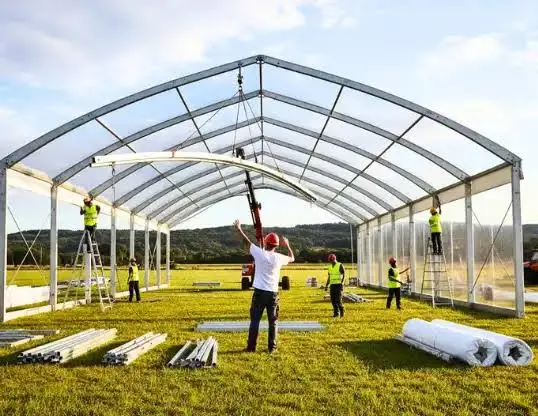
Choosing the right tent isn’t just about selecting a design you like,it’s about ensuring the structure fits your operational needs, available space, and long-term goals. A tent that’s too small can restrict productivity, while one that’s too large may increase unnecessary construction and maintenance costs.
Whether you’re planning a warehouse tent, industrial tent, labour accommodation tent, event tent, or a custom tensile structure, selecting the right size is one of the most important decisions you’ll make.
In this guide, we’ll walk you through the key factors to consider, common sizing mistakes to avoid, and how professional planning can help you maximize your investment.
Why Tent Size Matters More Than You Think
The size of your tent influences far more than the available floor space. It affects:
- Operational efficiency
- Future expansion possibilities
- Ventilation and airflow
- Vehicle and equipment movement
- Safety and accessibility
- Material costs
- Installation requirements
Choosing the right dimensions from the beginning helps prevent costly modifications later.
Step 1: Define the Purpose of the Tent
Before calculating dimensions, ask yourself one simple question:
What will the tent be used for?
Different applications require different layouts.
Warehouse Tents
Warehouse tents require sufficient space for:
- Inventory storage
- Racking systems
- Forklift movement
- Loading and unloading
- Future stock expansion
Industrial Tents
Industrial tents often accommodate:
- Heavy machinery
- Manufacturing equipment
- Assembly lines
- Maintenance activities
These projects generally require wider spans and greater internal clearance.
Labour Accommodation Tents
Labour tents need to provide comfortable living conditions while complying with project requirements. Planning should include:
- Sleeping areas
- Walkways
- Ventilation
- Emergency exits
- Utility spaces
Event & Exhibition Tents
For event applications, capacity depends on:
- Guest numbers
- Seating arrangements
- Stage size
- Catering area
- Reception space
The layout should allow guests to move comfortably throughout the venue.
Step 2: Estimate Capacity Requirements
Instead of focusing only on the overall area, think about how the space will be used.
Consider:
- Number of people
- Vehicles
- Equipment
- Storage racks
- Workstations
- Loading zones
- Future operational growth
Planning for current and future needs helps avoid the need for costly expansions.
Step 3: Measure Your Available Site
Even the best tent design won’t perform well if it doesn’t fit the available site.
Before finalizing the dimensions, evaluate:
- Site width
- Site length
- Height restrictions
- Nearby buildings
- Access roads
- Underground utilities
- Drainage conditions
A professional site survey helps ensure the structure is designed to suit the location.
Step 4: Consider Internal Clearance Height
Many buyers focus on the floor dimensions while overlooking internal height.
Clearance height is especially important for:
- Forklifts
- Trucks
- Storage racks
- Industrial machinery
- Cranes
- Ventilation systems
Choosing the correct height improves both safety and operational efficiency.
Step 5: Think About Future Expansion
Your current requirements may change over time.
Ask yourself:
- Will my inventory increase?
- Will I need additional machinery?
- Could my workforce expand?
- Will customer demand grow?
If the answer is yes, choosing a modular or expandable design may be a smarter long-term investment.
Common Mistakes When Choosing Tent Size
Many buyers make similar mistakes during the planning stage.
Choosing Based Only on Budget
Selecting a smaller tent solely to reduce initial costs may create operational challenges later.
Ignoring Equipment Movement
A warehouse may appear large enough until forklifts begin operating.Always plan sufficient circulation space.
Forgetting Future Growth
Businesses often outgrow their facilities faster than expected.Planning ahead can save time and money.
Overlooking Ventilation Requirements
Larger enclosed spaces require proper airflow for comfort and operational efficiency.
Skipping Professional Planning
Every site is different.
Professional design ensures the structure meets operational, environmental, and structural requirements.
How Custom Tent Design Helps
A custom-designed tent allows you to optimize every square metre of available space.
Benefits include:
✔ Efficient layout
✔ Better workflow
✔ Improved accessibility
✔ Optimized storage
✔ Future expansion options
✔ Better return on investment
Rather than adapting your operations to fit a standard tent, a custom solution is designed around your business needs.
Choosing the Right Manufacturer
Selecting the right manufacturer is just as important as choosing the right size.
Look for a company that provides:
- Site assessment
- Engineering support
- Custom design
- Manufacturing
- Professional installation
- Maintenance services
- Turnkey project management
Working with one experienced partner simplifies the entire process and helps ensure a high-quality result.
Tent Size Planning Checklist
Before approving your project, confirm that you have:
✅ Defined the tent’s purpose
✅ Estimated current capacity requirements
✅ Considered future expansion
✅ Measured the available site
✅ Planned access routes
✅ Checked height requirements
✅ Evaluated ventilation needs
✅ Consulted a professional design team
Final thought
Choosing the right tent size is about more than finding a structure that fits your site. It’s about creating a space that supports your operations today while allowing room for future growth.
By considering the purpose of the tent, capacity requirements, site conditions, clearance height, and long-term plans, you can make a more informed decision and avoid costly changes later. Partnering with an experienced tent manufacturer ensures your project is professionally designed, engineered, and installed for maximum performance and value.
Ready to Find the Right Tent for Your Project?
Whether you need a warehouse tent, industrial tent, labour accommodation tent, event tent, or a fully customized tensile structure, our team can help you choose the right size and design for your specific requirements.
Explore Our Solutions
- Warehouse Tents
- Industrial Tents
- Labour Tents
- Event Tents
- Custom Tent Solutions
- Design Services
- Manufacturing Services
- Installation Services
- Maintenance Services
- Turnkey Solutions
Get a Free Quote Speak with Our Experts
Frequently Asked Questions
What is the best tent size for a warehouse?
The ideal size depends on storage capacity, equipment, operational workflow, and future expansion plans. There is no one-size-fits-all solution.
Can I expand my tent later?
Many modular tent systems can be extended or modified, depending on the original design and site conditions.
How do I calculate the size of a commercial tent?
Start by identifying the intended use, the number of users or equipment, circulation space, and future operational requirements. A professional site survey provides the most accurate recommendation.
Does tent height matter?
Yes. Internal clearance affects equipment movement, ventilation, storage capacity, and overall usability.
Should I choose a standard or custom tent?
A custom tent is often the better choice for businesses with specific operational needs, unique site constraints, or plans for future expansion.