
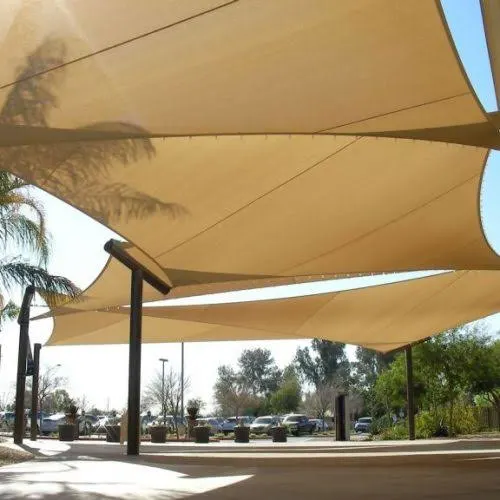
An uncovered parking area or outdoor seating space can be difficult to use comfortably during sunny weather. A well-planned tensile shade adds shelter while giving the area a clean, attractive appearance.
For villas, commercial buildings and community spaces, tensile shades offer flexible design possibilities. Choosing the right solution starts with understanding how the space will be used, where shade is needed and how the structure will fit the site.
What Is a Tensile Shade Structure?
A tensile shade structure uses a flexible membrane held under tension and supported by structural elements such as steel columns, frames and cables. The tension helps the fabric maintain its intended shape.
Unlike a conventional flat roof, a tensile canopy can form curves, peaks and other distinctive profiles. Its final shape serves a practical purpose as well as a visual one: the membrane geometry, supports and drainage arrangement must work together.
Where Can Tensile Shades Be Used?
Car Parking Areas
Tensile car parking shades provide overhead cover for vehicles at homes, offices and commercial properties. A suitable layout considers parking bay dimensions, vehicle movement and the position of supporting columns.
Shade coverage also changes throughout the day. Planning around the sun’s direction helps avoid a canopy that looks large enough on paper but leaves important areas exposed.
Gardens and Outdoor Seating
A tensile canopy can define a comfortable place for seating, dining or relaxing. For villa gardens and terraces, the design should suit the surrounding building and leave enough room for furniture and movement.
Column locations deserve particular attention in smaller spaces, where even one poorly positioned support can interrupt the usable area.
School and Community Spaces
Play areas, walkways and gathering spaces can benefit from planned overhead shade. These projects need careful consideration of clearances, circulation and the activities taking place beneath the canopy.
Commercial Outdoor Areas
Entrance areas, customer waiting spaces and outdoor seating can use tensile shades to create a more welcoming setting. Fabric colours and canopy shapes can be selected to complement the property’s appearance.
Choosing the Right Shade Fabric
The fabric should match the purpose of the project. Sun protection, airflow and rain protection are different requirements, so they should be discussed separately.
Two commonly considered options are:
- HDPE shade fabric: An open-knit material commonly used for sun shading where airflow is desirable. Standard shade mesh should not be treated as a waterproof roof.
- PVC-coated architectural fabric: A membrane option used for covered structures where rain protection may be required. Effective performance depends on the complete design, including seams, slope and drainage.
Before choosing a material, ask for the specific product’s technical information, care requirements and warranty terms. UV protection, fire performance and durability should be confirmed for the selected product rather than assumed from its material name.
Design Details That Matter
Useful Shade Coverage
Start with the area that needs protection, rather than only the overall canopy dimensions. For parking, include the vehicle footprint and access space. For seating, consider where people will sit at different times of day.
Support Positions and Height
Columns should allow easy movement around the site. The canopy height must suit the intended use while remaining part of a properly designed structural system.
Foundations and Site Conditions
The supporting structure and foundations should be designed for the actual location and loading requirements. Existing paving alone does not establish whether a site can support a new canopy.
Water Drainage
Where rain protection is required, water should drain toward suitable discharge points. The design should avoid directing runoff onto entrances, pedestrian routes or neighbouring property.
Maintenance Access
Cleaning and inspection should be considered from the beginning. Accessible connections and a practical maintenance plan make it easier to care for the finished structure.
What Affects the Cost of a Tensile Shade?
Tensile shade pricing depends on more than the covered area. Fabric specification, canopy shape, span, steelwork, foundations, site access and installation conditions all influence the quotation.
When comparing proposals, check that they describe the same scope. A clear quotation should identify the proposed material, dimensions, structural work, finish, installation and any exclusions.
Sharing photographs, approximate measurements and the intended use of the space helps a supplier prepare a more relevant proposal.
Discuss Your Tensile Shade Project with BAB TENTS
Whether you need cover for car parking, a villa garden or a commercial outdoor area, start with a solution planned around your space.
BAB TENTS supplies and installs tent and shade solutions. Share your site location, photographs and approximate dimensions with our team to discuss your tensile shade requirements and request a quotation.
Email: sales@babtents.ae
Website: https://babtents.ae/