
When planning a parking area for a home, commercial property, industrial facility, or public space, one common question arises: Should you choose open parking or covered parking?
While open parking may seem like a simple and cost-effective option, prolonged exposure to sunlight, rain, dust, and other environmental conditions can gradually affect a vehicle’s appearance and condition. Covered parking, on the other hand, provides an added layer of protection that can help preserve both the vehicle and the parking environment.
In regions with intense sunshine and varying weather conditions, choosing the right parking solution is about more than convenience,it’s about protecting your investment over the long term. This article compares open and covered parking to help you understand their differences and make an informed decision.
Understanding Open Parking
Open parking refers to parking spaces without any overhead protection. These areas are commonly found in residential neighborhoods, office buildings, shopping centers, and public parking lots.
Advantages of Open Parking
- Lower initial development cost
- Quick and simple to construct
- Suitable for temporary parking needs
- Minimal structural requirements
However, these advantages often come with long-term trade-offs.
Challenges of Open Parking
Vehicles parked in open spaces are exposed to environmental conditions throughout the year.
Common challenges include:
Continuous Sun Exposure
Direct sunlight can increase cabin temperatures and accelerate the fading of exterior paint and interior materials.
Dust and Sand Accumulation
In dry and dusty environments, vehicles require more frequent cleaning to maintain their appearance.
Rain and Moisture
Rainwater can leave mineral deposits and contribute to dirt buildup, requiring additional maintenance.
Bird Droppings and Tree Debris
Vehicles parked beneath trees may be exposed to leaves, sap, and bird droppings, which can affect the vehicle’s finish if not cleaned promptly.
What Is Covered Parking?
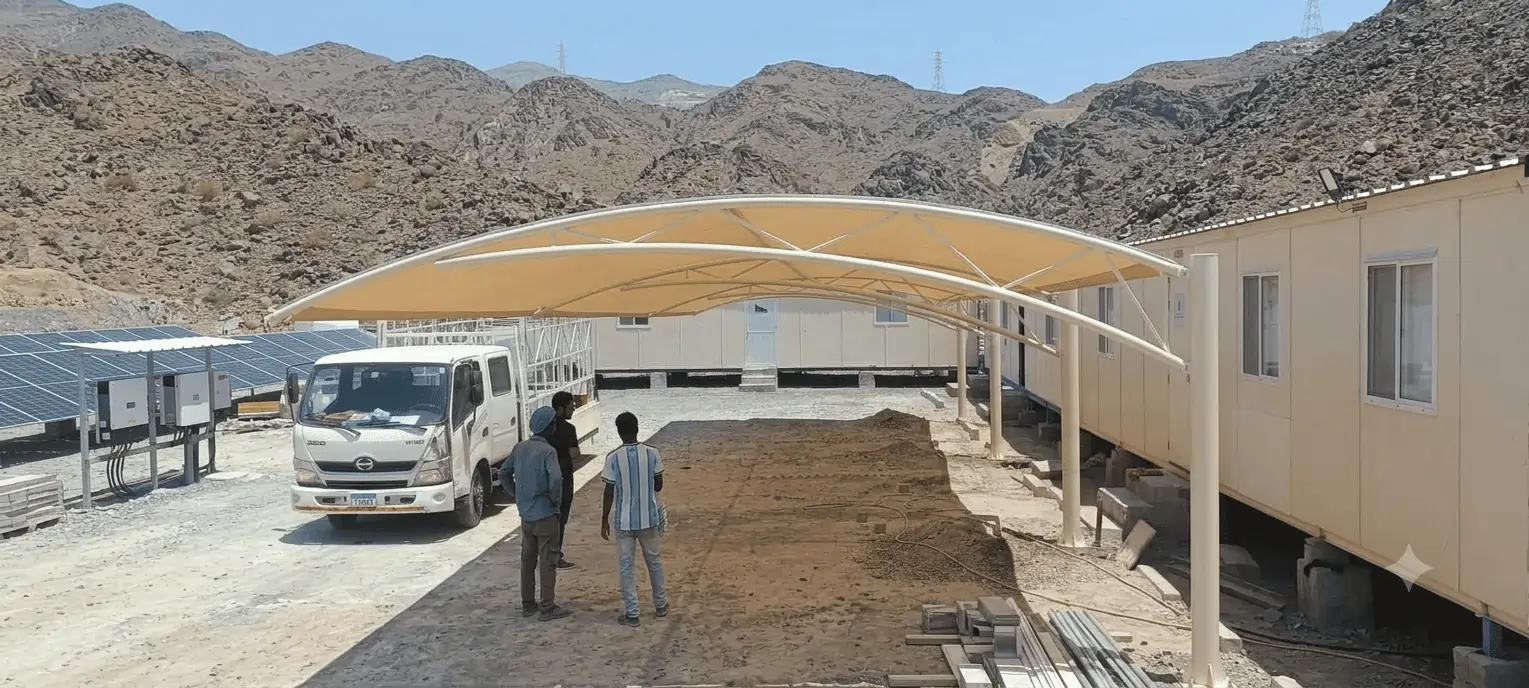
Covered parking uses a roof or shade structure to provide overhead protection for vehicles. Depending on the project requirements, covered parking may use tensile fabric, HDPE, PVC, PTFE, or other roofing materials supported by engineered steel structures.
Covered parking solutions are widely used for:
- Residential villas
- Apartment complexes
- Commercial buildings
- Hospitals
- Schools
- Shopping malls
- Industrial facilities
- Government properties
Benefits of Covered Parking
Better Protection from UV Rays
A well-designed parking shade helps reduce direct sunlight reaching the vehicle, contributing to a cooler parking environment and helping preserve exterior and interior finishes.
Reduced Heat Build-Up
Vehicles parked under a covered structure generally experience lower interior temperatures compared to those parked in direct sunlight, making them more comfortable to use.
Cleaner Vehicles
Overhead protection reduces the amount of dust, leaves, and debris settling on parked vehicles, helping them stay cleaner for longer periods.
Enhanced User Comfort
Covered parking offers greater convenience by providing shade while entering or exiting the vehicle, especially during hot weather.
Improved Property Appearance
Modern shade structures create a clean and organized parking area that complements residential, commercial, and industrial properties.
Open Parking vs Covered Parking
| Feature | Open Parking | Covered Parking |
| Sun Protection | None | Excellent |
| UV Exposure | High | Significantly Reduced |
| Vehicle Cleanliness | More Frequent Cleaning | Reduced Dust & Debris |
| Interior Temperature | Higher | Cooler Environment |
| User Comfort | Limited | Enhanced |
| Weather Protection | Minimal | Better Protection from Sun and Rain |
| Long-Term Vehicle Care | More Exposure | Better Preservation |
Which Option Is Better for Long-Term Vehicle Protection?
For occasional or short-term parking, open parking may be sufficient. However, for vehicles that remain parked outdoors for extended periods, covered parking offers several long-term advantages.
By reducing direct exposure to sunlight and environmental elements, covered parking can help:
- Preserve exterior paint
- Protect dashboard and upholstery
- Reduce heat buildup
- Minimize cleaning requirements
- Create a more comfortable parking experience
The level of protection depends on factors such as the design of the structure, roofing material, installation quality, and ongoing maintenance.
Choosing the Right Covered Parking Solution
When selecting a covered parking system, consider:
Parking Capacity
Determine whether the structure is intended for residential, commercial, or industrial use.
Roofing Material
Choose a material that aligns with your project’s performance requirements, durability expectations, and aesthetic preferences.
Structural Design
Select a design that complements the available space while providing effective coverage.
Professional Installation
Proper engineering and installation contribute to the long-term performance and safety of the structure.
Why Businesses and Homeowners Prefer Covered Parking
Many property owners view covered parking as a practical long-term investment because it provides benefits for both vehicles and users.
Some of the key reasons include:
- Improved parking experience
- Better vehicle protection
- Enhanced property appearance
- Greater usability of outdoor spaces
- Increased comfort for visitors and employees
These advantages make covered parking suitable for a wide range of applications, from private residences to commercial developments.
Final Thoughts
Choosing between open parking and covered parking depends on your property’s needs, budget, and how you intend to use the space. While open parking offers simplicity, covered parking provides additional protection that can help maintain vehicle condition, improve user comfort, and enhance the overall functionality of your parking area.
If your goal is to create a parking solution that combines durability, aesthetics, and long-term value, a professionally designed covered parking structure is a worthwhile consideration.
Protect Your Vehicles with High-Quality Covered Parking Solutions
Whether you need a parking solution for your home, commercial property, or industrial facility, BAB Tents offers customized car parking shade systems designed for durability, functionality, and visual appeal.
Request a Free Quote Talk to Our Experts
Frequently Asked Questions
Is covered parking better than open parking?
Covered parking offers additional protection from sunlight and weather, making it a suitable option for long-term vehicle care and user comfort.
Does covered parking help keep vehicles cooler?
Yes. By reducing direct sunlight, covered parking can help lower interior temperatures compared to open parking.
Where are covered parking solutions commonly used?
Covered parking is widely used in homes, commercial buildings, shopping centers, hospitals, schools, industrial facilities, and public parking areas.
Which roofing material is best for covered parking?
The ideal material depends on the project’s location, budget, performance requirements, and design preferences. Common options include HDPE, PVC, and PTFE fabrics.
Can covered parking improve property value?
A well-designed parking area can enhance the appearance, functionality, and usability of a property, making it a valuable long-term improvement.